Tag Archives: Dean Martin

Italians in America ~ Ann Scavo (Anncruise)

ital-amer-1

‘Amore’: Italian-American Singers In The 20th Century

American singer and actor Frank Sinatra sits at the piano. Getty Images
American singer and actor Frank Sinatra sits at the piano.
Getty Images

Apparently, Dean Martin didn’t much like the song “That’s Amore,” but in 1953 it became one of his biggest hits. It’s a song that seems to capture a moment in pop history when nearly every hit was performed by an Italian-American singer. The story of “That’s Amore” and the songs made famous by Frank Sinatra, Perry Como and others is told in a new book called Amore. Weekend All Things Considered host Guy Raz recently spoke with the author, Mark Rotella, about Italian singers in 20th-century America.

“That’s Amore” came from a movie called The Caddy, starring Dean Martin and Jerry Lewis; it’s about an Italian man who plays a golf pro and is followed by a faithful caddy. In the movie, when the two return to Italy and are greeted by their Italian family, they break into this song. When we hear it today, it sounds like a caricature of Italian culture. But, Rotella says, it served as an introduction to Italian culture for many Americans.

“It was one of the more obvious ones,” he says. “There were Italian singers before, but this led to other kitschy songs, like Rosemary Clooney’s ‘Mambo Italiano,’ and so many other songs that came after that were kind of kitschy but were also really pop and kind of fun.”

Rotella’s book isn’t just about Italian-American singers. It’s also about a turning point in 20th-century America when Italian entertainers started to be seen as American entertainers. Rotella says that there was a Golden Age of entertainment that started around 1947.

“This is when second- and third-generation Americans of Italian decent were coming of age,” he says. “This is post-war; it was a time of optimism. This era was basically the end of the big band and the beginning of the solo voice, and this lasted through the ’50s, up until I’d say 1964, with The Beatles.”

This was happening during a period when there was a great deal of discrimination against Italians in America. For example, this excerpt was taken from a profile on Joe DiMaggio from Life Magazine in 1939.

“Although he learned Italian first, Joe now speaks English without an accent. … Instead of olive oil or smelly bear grease, he keeps his hair slicked with water. He never reeks of garlic and prefers chicken chow mein to spaghetti.”

These kinds of comments were acceptable in mainstream dialogue, and yet a few years later, Italian singers would dominate the pop charts.

“This is the time when so many singers were now seen on TV,” Rotella says. “They were good-looking. They had a certain sensibility, a certain attitude that was open and charming.”

Rotella says that nearly every singer he interviewed named Enrico Caruso as an influence. Caruso was the first pop artist to sell a million copies of his music, offering his recordings on flat discs for the RCA Victor Vitrolas of the time. Rotella says that this shaped the way music was sold for years to come.

“They sold so much, this really defined how music was recorded and on what medium,” Rotella says. “It was going to be Victor on the flat plastic records.”

One of the singers Rotella includes in his book is none other than the king of the golden age of Italian-American music, Frank Sinatra. Rotella calls Sinatra’s song “Fly Me to the Moon” a metaphor for all of the breakthroughs that Italian singers achieved.

“When you hear the song, it’s optimistic,” he says. “It’s kind of dreamy, forward-thinking, but it’s tough. He says, ‘fly me to the moon,’ but it’s almost as if he’s there already. This is coming at a time when music was going to change. It’s the tail-end of the success of the Rat Pack. It was at this time that almost total assimilation of Italians had happened. In ways, I feel like after this [song], there were so many Italians that followed him. Not necessarily performing Italian music; we wouldn’t necessarily know them as Italians today. This song of reaching the moon seemed to me to be every immigrant’s dream of assimilating.

(Note:  videos were added to this article ~Marie)

ital-amer-3

ital-amer-4

Descendants from Sicilian village keep their heritage alive in America

People from Sciacca, Agrigento congregating outside the local church before leaving for America.

Between 1880 and 1920 over four million Italians were recorded as entering the United States.  About three-fourths of these immigrants went through the Ellis Island immigration station with the majority being males between the ages of 24 and 45.

The island of Sicily and the region around Naples, both in the south, accounted for over half the Italians who moved to the U.S. looking for a better life.

According to manifest documents from the ships, so many Sicilians reported ‘Sciacca in Agrigento’ as their home village that immigration inspectors used “ditto” marks to record this information.

Many of these Italians settled in Little Italy neighborhoods all over the country, the most famous being in New York.

Discrimination between Italians in Little Italy was rampant.

Being fiercely provincial and proud of their own regions, the Italians from Naples, Calabria and Bari looked down on Sicilians, particularly those from Sciacca.

Given their humble beginnings, their descendants were taught to be proud of their Sicilian heritage.

Baseball legend Mike Piazza’s father’s family comes from Sciacca, and though he doesn’t speak Italian, the former Mets catcher is fiercely proud of his roots.

“I feel a strong tie to Sicily, since my heritage is there. My grandfather Rosario came from Sciacca, to the United States and my father grew me up following the Italian tradition. I think it’s in our DNA to strive to work hard and persevere,” Piazza said.

“One thing that was present in me was my father’s distinct love of his Italian heritage and Sicilian ancestry.

I can’t tell you how many times my father would say “Amuni a monjare, beddu”, and “mezza mortu”.

He would also take a strong stand against negative Italian American stereotypes saying that they “don’t represent the real Italians”.

Piazza also said he travels to Sciacca regularly. “It’s something I have great pride in knowing how proud my father and grandfather would be if they could see me here.”

Mike Piazza: A proud descendent of Sciacca.

Musician Jon Bon Jovi is another who is descended from emigrants from Siacca. In 2013, Bongiovi Sr. gladly shared his family’s pasta sauces – the recipes for which originated in Sciacca and were passed down through three generations.

Cartoon artist, director and producer Joseph Barbera, who formed Hanna-Barbera with William Hanna, is another who is descended from emigrants from Sciacca. Both his parents were born in Sciacca and he grew up speaking Italian.

Alicia Keys is another who has found out about her large extended Italian family. Her great-grandfather Michiele was from Sciacca.

Mike Marino, most famous for his hilarious segment about an Italian president from New Jersey, is another who is descended from emigrants from Sciacca.

As his grandfather once said: “YOU MAY LEAVE SICILY – BUT SICILY NEVER LEAVES YOU.”


How Sciacca looks today

ital-amer-3


ital-amer-8


Four Presidents, a Mountain and an Italian Chief Carver: the Long Forgotten History of Luigi del Bianco

by FRANCESCA BEZZONE

Luigi del Bianco working at Mount Rushmore
Everyone knows Mount Rushmore, with its iconic representations of four of the most important presidents of US history: George Washington, Thomas Jefferson, F.D. Roosevelt and Abraham Lincoln. As a child, I remember being fascinated by their stoney, gigantic faces and I often wondered how someone could have made them look so perfect and lifelike; as you would expect from a  5 year old, I thought a single sculptor spent his entire life carving the mountain on his own,  with his scalpel in one hand and a hammer in the other, failing to understand that a project of such  a magnitude had very likely involved hundreds of people through a number of years.
Even if I had known that then, I certainly would not have been aware of the essential role of Italy in the creation of the Mount Rushmore Memorial, because its recognition came only in very recent times, when a previously unknown Friuli Venezia-Giulia migrant, Luigi del Bianco, was recognised as chief carver of the monument.
Bringing justice to Luigi
History tells us that, between the 4th of October 1927 and the 31st of October 1941, 400 people worked on the sculpting and carving of Mount Rushmore. They were led by Gutzon Borglum and his son, sculptors and artists of Danish descent.
Among those 400 workers, in 1935 made his appearance Luigi del Bianco, from Meduno, in the north eastern region of Friuli Venezia Giulia, who had studied carving in Venice and Vienna before trying his luck on the other side of the ocean and emigrating to the United States.  Del Bianco’s name became known among historians and specialists of Mount Rushmore when his own grandson, Lou del Bianco, and his late uncle Caesar, began a strenuous campaign to have the role of their own ancestor in the making of the Mount Rushmore Memorial recognised.
It was the Italian Luigi del Bianco the artist who gave to America's timeless stone presidents their life-like features and immortal gaze.
It was the Italian Luigi del Bianco the artist who gave to America’s timeless stone presidents their life-like features and immortal gaze.
Because Caesar and Lou both believed Luigi had been more than a simple worker at the site, they set on a quest: demonstrating it to the world. It was Caesar, son of Luigi, who started the amazing adventure in the late 1980s, when Rex Allen Smith published “The Carving of Mount Rushmore:” here, the name of his father never appeared. Caesar was gutted.
More than 20 years later D.J. Gladstone, the author of the ultimate work on del Bianco, “Carving a Niche for Himself” (2014), would say that talking about Mount Rushmore without mentioning Luigi del Bianco was the equivalent of talking about the Yankees without mentioning Joe DiMaggio: but how much research, work and perseverance was behind such a statement. The research, work  and perseverance of Caesar and his nephew  Lou, who explored libraries, unearthed documents and campaigned for recognition, refusing to let their relative fall into oblivion.
After Caesar’s death in 2009, Lou took up his mission in full and it’s also thanks to his relentless  efforts that Cameron Sholly, current director of the Midwest region for the National Park Services, accepted to reassess Luigi del Bianco’s role in the inception and creation of Mount Rushmore. Shelley came to the conclusion that  del Bianco’s grandson was right: Luigi had been, indeed, the main carver at the site, the artist who gave to America’s timeless stone presidents their life-like features and immortal gaze.
Who was Luigi del Bianco?
Chief carver at Mount Rushmore, of course, but his life held much more than that. He was born in 1892 aboard a ship near Le Havre, in France, while his parents had been returning to Italy from the United States. The family, as said, settled in the North East of Italy and it’s there that 11 year old Luigi started studying carving and understood how talented he was. Still an adolescent, he had travelled to the US for the first time and settled with relatives in Vermont: there, he became known as a skilful carver. After returning to Italy to serve his country during the First World War, he was in Vermont once more and then settled in Port Chester, where his family still resides today.
While in Port Chester, del Bianco met Borglum, with whom he began to work: it was the beginning of the collaboration who was to bring him to South Dakota and to Mount Rushmore where, as chief carver, he became responsible of refining the presidents’ facial expressions. According to The Times, he spent a particularly long time sculpting Lincoln’s face and his eyes, whose pupils were made more vibrant by inserting wedges of granite in them. He worked at Mount Rushmore from 1935 to 1941, when he returned to Port Chester. Here he died in 1969, at the age of 78, because of silicosis, a disease caused, tragically, by the same thing that gave him so much joy in life: stone.
 ital-amer-3


Il Volo Professional ~~ Gianluca Receives Dean Martin Award

GianDeanMartinPromo


Friday, July 22 at 12 am at the  Sala Consiliare del Comune di Pescara,  in the course of the 9th Prix presentation Dean Martin, will be presented the award to Gianluca Ginoble from Il Volo. During the press conference will be announced the names of the winners of this year, the ceremony of the Prize will take place Sunday, July 31, at 21 h. at Muzii square. ~~ Lydka

source: Gianluca Ginoble riceve il premio Dean Martin ~~ http://www.pescaranews.com

Official Facebook: Ass. Fondazione Dean Martin


Photos: Dean Martin Award to Gianluca July 22.2016 ~~ Rock Me Il Volo Facebook


Next Appearance by Gianluca:

Tomorrow night Gianluca  will be at the White night of Pineto. It will be dedicated to the memory of Marco Calabretta, the young footballer who died in September last year due to a heart defect, while he was playing a game of football. And just to remember Marco, tomorrow night at the ribbon-cutting ceremony of the event will be Gianluca Ginoble, the singer of the group “Il Volo”, along with civil and military authorities.  ~~ Lydka

source: Pineto, Gianluca Ginoble alla Notte Bianca per ricordare Marco Calabretta ~~ cityrumors.it

DID YOU KNOW????????

icon questReport

Let’s face it, when you do a feature called “In Case You Missed it” and there is no news to miss, well, a girl has to make a living somehow. I’m starting this new feature called “Did You Know?” It was inspired by a Flight Crew member, Ann, when she sent us a few “Did you Know?” tidbits. That inspired me to look all over for others and hopefully give you some surprising facts, not always about Il Volo, but also things somehow connected to them. Now, you may already know some of these, that’s ok, maybe you can give us a “Did you know?” of your own. Feel free!!!

DID YOU KNOW??

There are a lot of theories that your birth order in the family may determine how you do in life, including your attitudes and behaviors. “Our Guys” are each a different birth order. Gianluca is the oldest in his family, Piero is a middle child and Ignazio is the youngest in his. Could this be the reason that Gianluca is serious and a perfectionist, that Piero, being a middle child and prehaps needing attention, dresses a little outside the box sometimes? Ignazio being the youngest being so funny and getting away with his antics? (Don’t write me, I’m not criticizing, just making some observations)in42

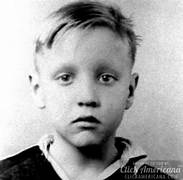
This is from our friend Ann: Dean Martin only spoke Italian up till he entered school? He was often made fun of for his poor English which eventually caused him to drop out of school in the 10th grade, along with the fact that he thought he was smarter than his teachers?                                           dean

Sicily is the largest island in the Mediterranean?

Naro, Piero’s home, was founded in the middle ages?

Montepagano, Gianluca’s home, has a population of only 774?

Marsala, Ignazio’s home, dates back to 397 BC, when survivors of an invasion built a town where present day Marsala stands?

Elvis Presley sang in public for the first time when he was 10 years old, standing on a box to reach the microphone, at the Mississippi/Alabama Fair?

elvis

This too from Ann :

Did you know that your Italian language skills could give   you leverage in the job market? Don’t know Italian? Read why it’s important to   learn the romance language… http://bit.ly/1kqM4M4
And by the way, we’re hiring!   Check out the position here:http://bit.ly/1bRFN1K
 So you see, it’s good to know Italian!!!
                                                    chef
A few reminders, See Kelly’s post on doing a picture or video for Gianluca’s birthday, you only have till the 31st.
                                                   GG
We know a few things up till today. Gianluca tweeted he is in Rome, Piero is at the beach with his family and apparently enjoying a lot of Sicilian food. Ignazio seems to be doing the party scene with his friends. We are hoping for new news shortly, we’ll get it to you as soon as we know.
I hope you had fun with this, we’ll do another soon!!
Linda