Taormina The Greek-Roman Theatre “Is it Greek or Roman? This is a question that has always been open to debate among experts and critics. All their disputes would end if they remembered Taormina’s origins as a Greek “Polis” and the fact that each and every ancient Greek town had its own Theatre where they performed tragedies by Aeschylus, Sophocles and Euripides and comedies by Aristophanes, just to name the most famous authors. The Theatre in Taormina is the second-largest in Sicily after the one in Siracusa. All the Romans did later, in accordance with their well-known ostentatious nature, was enlarge the theatre as it was very small. And it apparently took decades to build. It is fifty metres wide, one hundred and twenty metres long and twenty metres high, which means that about 100,000 cubic metres of stone had to be removed. Further evidence that the Theatre is of Greek origin is in the well-cut bricks of Taormina stone (similar to marble) below the scene of the Theatre; these are a typical example of the ancient Greek building technique. The theatre is divided into three main sections: the scene, the orchestra and the cavea. The scene is opposite the cavea and is obviously where the actors used to perform.” To read more click http://www.taormina.it/
Greek Theatre by MN
All Photos in and around Taormina by MFA (Michele) and MN (mlla)
Here are a couple of interesting Italian things. No, not “THEM”! Something else Italian. Courtesy of Ann (anncruise) who always sends me fun Italian things. No, she doesn’t send “THEM”! Sheesh! I wouldn’t tell you if she did. You know how I am about sharing. ~Marie
If you’ve spent time in Italy you know that life in Italy and life in America are very different. While both cultures have their pros and cons, we think Americans can learn a lot from the way Italians live.
Traditionally, Italians have an easy-going and positive outlook on how to go about daily life. Italians live “la vita bella” (the beautiful life). But the beautiful life doesn’t mean the luxurious life — it means a relaxed, family-centric lifestyle.
Check out seven lessons Americans can learn from Italians below.
1. Eat slowly, locally and with others.
There’s really no such thing as Italian fast food. Sure, you’ll find a McDonald’s here and there, but in Italy the concept of eating transcends “fast and cheap.” Italy is all about “slow food.” Dinners are unhurried and eaten around a table (not a TV or computer screen) with one’s family. In Italy, food is natural, authentic and sourced locally.
2. Drink a little bit, but not too much.
Italians love their vino. But they don’t overdo it. Here in America, there’s a culture of binge-drinking. In Italy, a bottle of wine is shared among friends or around the dinner table. Stumbling around drunk in Italy is not viewed favorably. Italians like to drink, but they know how to keep it classy.
3. You should indulge a little every now and then… perché no??
There are so many delicious treats in Italy — rich gelato, mouth-watering pastries, decadent chocolates. Much like the philosophy on drinking, Italian culture has a “perché no?” take on treats. “Perché no?” translates to “why not?” The idea is to treat yourself by having a little bit of something tasty (because, why not?) but not having so much that you’re gorging yourself. Take Italian gelato shops for example… the normal size of a “coppa” (cup) would look tiny compared to the average size of a cup of ice cream in America.
Photo Courtesy of NIAF
4. Stop hurrying, start relaxing.
Life is less hurried in Italy. People don’t rush around with to-go cups of coffee, but rather sip their espresso at the “bar” (aka coffee shop). Meals tend to linger, whether they be at restaurants or at home. Pedestrians tend to meander. There’s significantly less emphasis put on being on time — rather, the emphasis falls on how that time is spent. Many Italians take a siesta of sorts — a break during the day, from 1 p.m. – 3 p.m., to eat lunch and relax.
5. Having family nearby is the best thing ever.
Families in Italy tend to stay in the same area, rather than moving around. Grandparents often care for grandchildren, siblings remain close and extended families are huge and welcoming. While it’s more common in the U.S. to go away for college and settle down somewhere other than where you grew up, it tends to be the opposite in Italy. Having family nearby is deeply valued in Italy. Having nonna(grandma), aunts, uncles and cousins drop by for dinner during the week or having a weekly extended family meal every Sunday is common and brings everyone together.
Photo NIAF
6. Gather and spend time outdoors.
Part of the great communal feel of Italy comes from the fact that people tend to congregate outdoors. Friends will meet up at a piazza and hang out there, rather than in a home. Piazzas are vibrant, outdoor hubs where tons of people gather, children play and tourists roam, creating a lively atmosphere. Similarly, many Italians do most of their shopping at a mercato, outdoor markets where vendors sell everything from food and wine to clothing and leather goods. In America, we have malls — which are great. But there’s nothing like wandering a mercato, sampling the fare and interacting with other locals.
7. Maintain a “bella figura.”
Bella figura literally translates to “beautiful figure” — but it’s more idiomatic than that. The idea of maintaining a bella figura is more like the idea of maintaining a good public image. Italians don’t get drunk in public, eat while they walk or wear pajamas to the dinner table because it would have a negative impact on their image. Bella figura is more than just looking good, it’s a way of life that emphasizes aesthetics and good behavior.
***
Finally, I really couldn’t resist this Nonna – Courtesy of The National Italian American Foundation (NIAF) and Ann.
Most of you saw the tweets or received an email announcing Il Volo’s concert at the Greek Theatre in Taormina. So I thought we’d give you a preview of things to come in our next Italia. You guessed it – we’re going to Taormina! The pictures above and below are just a few that I took in Taormina, one of my most favorite places in Sicily! The announcements are below, just in case you did not see them! Michele (MFA)
Taormina
The pictures above and below, from MN, are of the ancient Greek Theater in Taormina
MN says, “I believe, Nowadays, for security reasons, the theater can hold up to 3000 people whilst in ancient times was up to 5000.”
Concert Announcements:
Piero Barone Il Volo @piero_barone Le vendite sono ufficialmente aperte. Salesare officially open
Gianluca Il Volo @GianGinoble
20 Luglio al #TeatroAnticodiTaormina il nostro primo show in Italia. Le vendite sono ufficialmente aperte! Salesare officially open
The email announcement: Il Volo – Il trio vocale arriva in concerto a Taormina! Acquista subito i tuoi biglietti!
Per Google: Il Volo – The vocal trio arrives in concert in Taormina! Buy your tickets!
We all know that Sicilia is the Italian island Piero and Ignazio call home, so lets start our virtual tour of the region with a little overview by our own MN.
Tidbits on Sicily by MN (mlla)
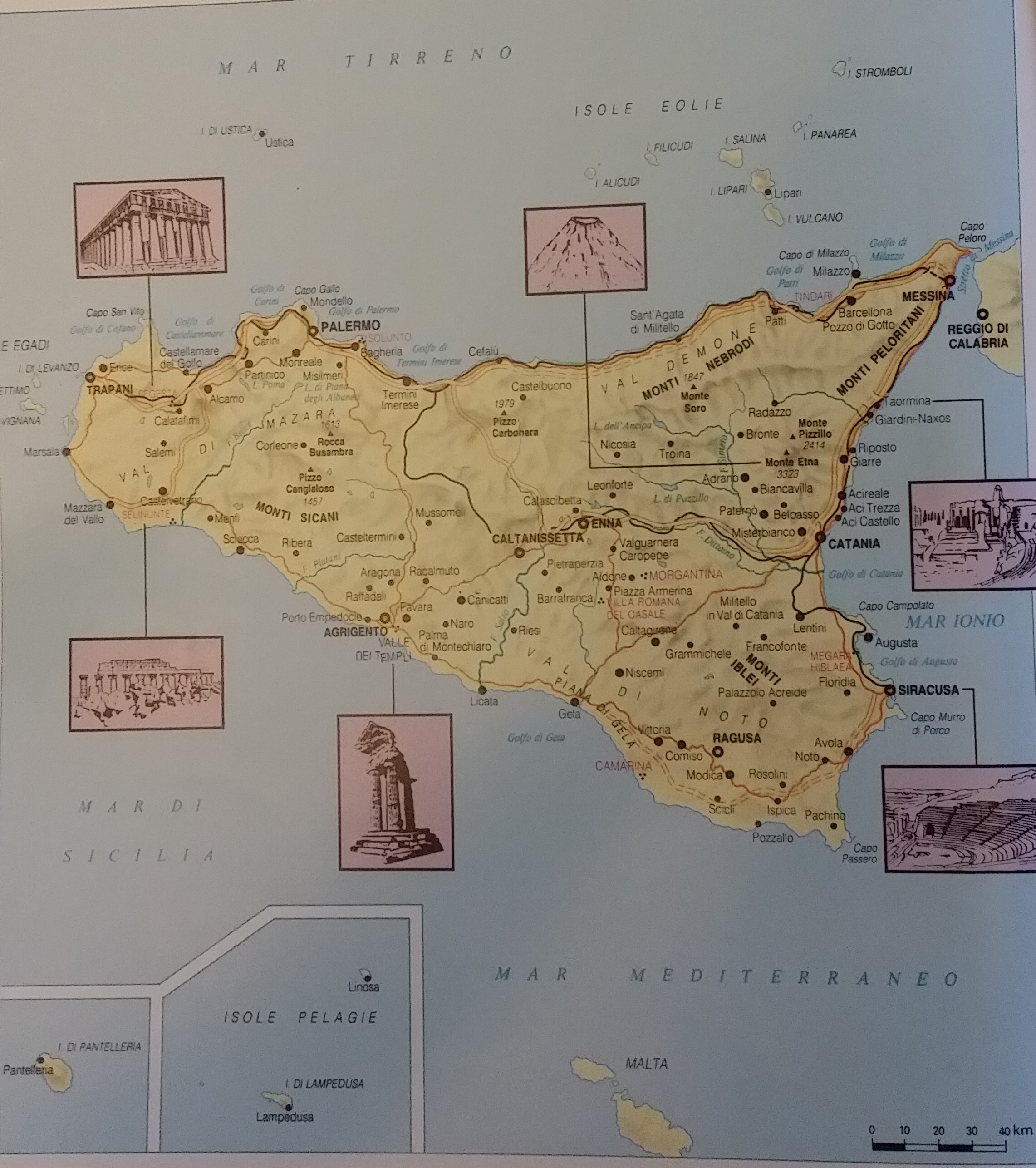
“Sicily ( Sicilia) is an autonomous Region in Italy. The island of Sicily has a surface of 25,708 km², and has about five million inhabitants. It is also the largest island in the Mediterranean Sea and it includes some groups of smaller islands like Isole Eolie, Egadi and Pelagie.
In Sicily you find, close to the cities of Messina and Catania, the Mount Etna the tallest active Volcano in Europe.”
Thank you MN for your contribution to Sicilia Part 1!
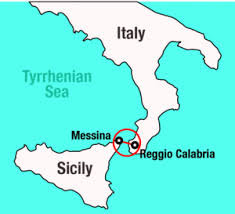
There are a number of ways to arrive in Sicily, of course you could fly, but you may also take a train, ferry or a hydrofoil. Our bus tour took us across the Strait of Messina (Stretto di Messina) from Villa San Giovanni in Reggio Calabria by ferry. We arrived in Messina in about twenty to 30 minutes. I think it took longer to load the ferry than to cross. If you travel by train, the train is loaded in a ferry and you are free to get out and roam around as we did.
CAR CARRIERS FOR MESSINA
Welcome toMessina
City of Europe
On the way to Mount Etna by tour bus
Inside a crater
Walking around a rim on Mount Etna
Numerous cones on the Etna
Etna continues to erupt and even though from a distance it looks as if it may have one symmetrical cone there are actually many cones across the mountain, visible in the pictures above. There have been numerous lava flows on the Etna, after past explosions, authorities in Sicily have been forced to build dams or dig ditches to divert lava away from homes, some have been abandoned.
Finally, a recipe that Leelee can actually make! I meant to run this recipe on March 19th. Other things got in the way. ~Marie
I had something for Ignazio in January and Gianluca in February, so I thought it was time to do something for Piero. Back in January, Piero posted a picture of what looks like what my family used to make, Zeppola’s (See Piero’s picture below. If they aren’t Zeppola’s, let’s just go with it anyway ?). This is also in honor of St. Joseph’s Day, March 19th.
I remember the wonderful Italian feasts when growing up in New York, the most noted being the San Gennaro feast in Little Italy in downtown Manhattan, which still goes on until today. No Italian feast was without the Zeppola stands (my family pronounced them, mind you this is phonetically, as Tsay-po-lah). Boy that looks funny.
What is a Zeppola? From Wikipedia: A Zeppola (plural: zeppole; in southern Italian dialects: zeppoli) is an Italian pastry consisting of a deep-fried dough ball of varying size but typically about 4 inches (10 cm) in diameter. This doughnut or fritter is usually topped with powdered sugar, and may be filled with custard, jelly, cannoli-style pastry cream or a butter-and-honey mixture. The consistency ranges from light and puffy, to bread- or pasta-like. Zeppole are typical of Italian cuisine, especially that of Rome and Naples. They are also served in Sicily, Sardinia, on the island of Malta, and in Italian-American communities in the United States. Zeppole are known by other names, including Bignè di San Giuseppe (in Rome), St. Joseph’s Day cake, and sfinge.[1] Zeppole are traditionally consumed during the Festa di San Giuseppe (Saint Joseph’s Day) celebrated every March 19, when zeppole are sold on many streets and sometimes presented as gifts. The custom was popularized in the early 19th century by Neapolitan baker Pasquale Pintauro. There are many versions of the Zeppole. The St. Joseph traditional version is made with ricotta and eggs. You can find many versions on the internet. St. Joseph’s Day The feast day of St. Joseph is celebrated on March 19 every year. St. Joseph’s Day is a Roman Catholic feast day commemorating the life of St. Joseph, the step-father of Jesus and husband of the Blessed Virgin Mary. People with very strong religious association, often those of southern Italian descent, typically celebrate St. Joseph’s Day. March 19 is said to be St. Joseph’s birthday. During a famine in Sicily, when food was scarce and many people were starving, the poor people had only their faith to rely on. St. Joseph was known as the protector of the Holy Family and Italians had strong family relationships, so they prayed for St. Joseph to intercede for them so they could have successful crops. Their prayers were answered, and the famine came to an end. In gratitude, people promised to make annual offerings of their most precious possession – food – in St. Joseph’s honor. Today, the faithful erect “St. Joseph Tables,” which are set to honor St. Joseph. They are filled with beautiful and often elaborate foods, including meatless dishes such as stuffed artichokes, pasta and fish, as well as breads, cookies, pastries, cakes and other delicacies. Each table is blessed by a priest and presided over by a statue of St. Joseph. A stalk of lily blossoms, votive candles and a lace tablecloth are other typical items used to decorate the feast table. When you visit a St. Joseph’s table, you often receive gifts of fava beans and breads. Fava beans play an integral part of the celebration because this was the food that saved the Sicilians from starvation. The bean is said to bring good luck, and it is believed that if the St. Joseph’s bread is kept in the home, the family will never starve
***
Now for the recipe. This is the way my Mom used to make them. Now this is really complicated so get ready!!!
You can make these easily at home using pre-made pizza dough. Heat a pot of oil to 375 degrees. Tear off 2 to 3 inch pieces of dough and carefully place them in the oil. Carefully turn them while frying. They will quickly brown and rise to the top. When they do remove them and drain. The Italian feasts usually shake the pieces in a paper bag with powdered sugar but my Mom just drizzled some honey over them.
THAT’S IT! MANGIA!
Come in and share the love of life, friends and Il Volo!